The work rarely pauses.
Messages come in at all hours. Families searching for answers. Patients asking for help navigating a system that often feels out of reach. Sometimes the requests fall outside the scope of what an organization can offer.
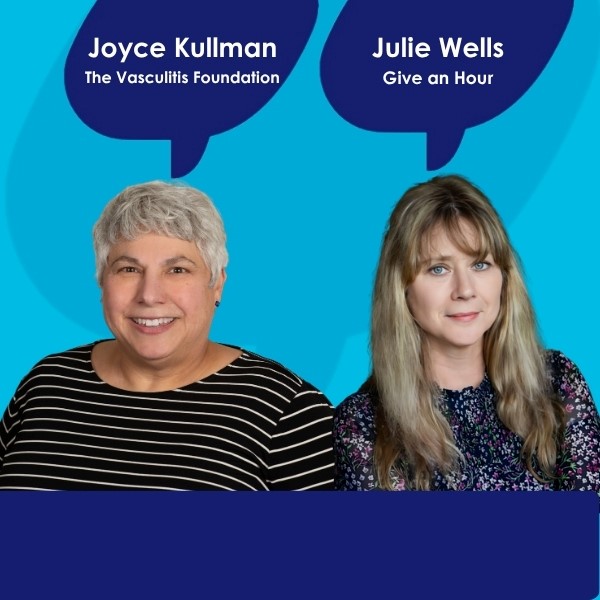
Joyce Kullman, executive director of The Vasculitis Foundation, says they’ve always answered every phone call, email, or social media message.
“In the past, the questions sometimes felt easier to answer. Now, the needs are more complex, and there are moments when we can’t provide a clear solution. That feeling of not being able to help is deeply discouraging—it weighs on us, because we never want to let our community down.”
For many rare disease advocacy leaders, this is the reality of the job. They are connectors, problem-solvers, and sources of support. They are also human. The strain has been building for years. Small teams. Expanding responsibilities. Communities that rely on them not just for information, but for reassurance, guidance, and hope.
The Weight That Doesn’t Show Up in a Job Description
The challenges facing rare disease communities are well documented – access to care, delayed diagnosis, complex treatment pathways.
What sits alongside those realities is harder to quantify. Patients describe isolation, fear about the future, exhaustion that comes with managing a chronic condition. The quiet grief of a life that no longer looks the way it once did.
Advocacy organizations absorb all of it.
Kullman and leaders like her describe spending hours responding to urgent outreach from families in crisis. Others spoke about the difficulty of setting boundaries when every request feels important. Many are operating without formal systems to respond when situations escalate.
There is a gap here. Not in commitment, but in support.
Listening Before Building
Give an Hour’s work to expand mental health support began with a simple premise – ask first. Amgen supports this work as a sponsor, helping extend its reach across the rare disease ecosystem.
Before designing programs or offering solutions, the team spent time listening to advocacy organizations across the rare disease community. Through structured conversations, intake assessments, and one-on-one discussions, leaders were invited to speak candidly about what they were experiencing and what they needed. What emerged was not a single challenge, but a pattern.
Teams were stretched thin. Mental health support for staff and volunteers was limited. Caregiver support was inconsistent. Many organizations wanted to do more, but lacked the time, tools, or infrastructure to make it sustainable.
Julie Wells, director of strategic relationships for Give an Hour, says that clarity shaped everything that followed.
“We spent about two years just listening and learning before we built anything. What we heard consistently was that organizations wanted to do more around mental health, but they didn’t have the time, tools, or infrastructure to do it in a sustainable way.”
Building Capacity Where It Matters Most
Rather than offering a single solution, Give an Hour developed a layered approach designed to meet organizations at different points in their growth.
Workshops focused on leadership and operational capacity. Peer support sessions created space for leaders to speak openly about the realities of their roles. Training modules introduced practical tools for crisis planning, trauma-informed support, and sustainable program design.
The structure was intentional. Some organizations needed foundational support. Others were ready to integrate mental health into existing programs.
“Our goal was never to come in with a one-size-fits-all solution,” Wells says. “It was to meet organizations where they are and help them build the infrastructure so mental health can be sustained as part of their work, not added on.”
Across the network, leaders began building shared language around mental health. They developed strategies for supporting their teams and started to rethink how care could extend beyond information and into emotional well-being.
Why This Matters for Patients
When advocacy organizations are supported, patients feel it.
Better prepared leaders can make clearer decisions. Stronger teams can provide more consistent guidance. Organizations with the right tools can respond more effectively when needs become urgent. The work led by Give an Hour is creating a foundation for that support to be more intentional, more accessible, and more sustainable across the rare disease community.
Kullman and her team at the Vasculitis Foundation have been involved throughout every phase of the initiative, from early alignment to deeper integration. She shared how Give an Hour’s collaboration helped them uncover what truly matters to patients:
“Overwhelmingly, responses to our community survey focused on the desire to feel better—mentally and physically,” she says.
In response, plans are now underway to make mental health a central theme across future initiatives, including a dedicated focus in upcoming programming and events.
“These insights have directly shaped planning for our annual symposium, where we’ll have the Give An Hour team onsite throughout the weekend, leading both large and small group sessions on recognizing and building wellness into everyday life. Our goal is to help attendees set meaningful intentions they can carry forward.”
The Foundation also developed a digital wellness kit for patients and care partners—providing guidance and support that’s available anytime, not just during events.
“We’re committed to offering ongoing, practical resources that empower patients and families well after the symposium concludes. Together, we’re laying the groundwork for lasting mental wellness in the vasculitis community.”
Strengthening the People Who Sustain the Work
Across participating organizations, changes are beginning to show up in tangible ways.
“The biggest shift we’re seeing is that mental health is no longer viewed as an extra. It’s becoming part of the pulse of how organizations support their communities,” Wells says.
Leaders report feeling more prepared to navigate difficult conversations. Teams are exploring how to build support systems that extend beyond immediate needs. Peer connections are forming between organizations that previously operated independently.
There is also a sense of recognition.
Participants have described the relief of hearing others articulate challenges they thought were theirs alone. The experience of being in a room, even a virtual one, where the weight of the work is understood without explanation.
“There’s something profoundly reassuring about connecting with others who truly understand the unique challenges we face,” Kullman says. “In these conversations, we realize we’re not alone. Our struggles and hopes are shared, and together we find renewed strength to keep moving forward.”
A Model Taking Shape
This initiative is still evolving, but the direction is clear.
What began as targeted support is developing into a framework that can be adapted, expanded, and sustained. Training models are being refined. Resources are being built for broader use. Conversations are shifting toward long-term integration.
“Ultimately, our goal is to help organizations embed mental health into the quality of life of their communities so it’s part of every conversation, not something they get to if there’s time,” Wells says.
Because when the people carrying the work are supported, everything around them becomes stronger.
Visit Give an Hour for more rare disease mental health resources.